5 Beginner Woodworking Projects Worth Trying First
Every experienced woodworker starts with a few simple builds. These five beginner woodworking projects help you develop practical skills, gain confidence, and enjoy the satisfaction of creating something useful with your own hands.
BEGINNER PROJECT
Robert Ellington
8/23/20263 min read


One of the easiest mistakes beginners make isn't choosing the wrong wood or buying the wrong tools.
It's choosing the wrong first project.
I used to believe that starting with something ambitious would help me improve faster. Instead, I ended up frustrated by complicated measurements, confusing joinery, and mistakes that could have been avoided with a little more experience.
What finally changed everything was giving myself permission to start smaller.
Those simpler projects didn't feel nearly as exciting at first, but they quietly taught me the skills that made every project afterward much easier.
The truth is that beginner woodworking isn't about building impressive furniture right away. It's about building confidence.
Each successful project teaches you something valuable, whether that's making straighter cuts, assembling parts more accurately, or applying a smoother finish. Those small victories build momentum that keeps you coming back to the workshop.
If you're wondering where to begin, these five beginner-friendly projects are worth trying before moving on to larger builds.


1. Wooden Toolbox
A simple toolbox teaches measuring, cutting, assembly, and basic joinery while giving you something you'll continue using for future projects.
2. Floating Shelf
Floating shelves help beginners practice clean edges, accurate dimensions, and careful installation. They also make attractive additions to almost any room.
3. Birdhouse
Building a birdhouse introduces several fundamental woodworking techniques without requiring complicated construction. It's also a rewarding project to share with family or place in your backyard.
4. Coat Rack
A wooden coat rack combines practical design with beginner-friendly construction. It offers great practice for drilling, layout, sanding, and finishing.
5. Small Bench
Although slightly more challenging than the others, a compact bench helps reinforce everything you've already learned while introducing stronger structural assembly.
One thing I've noticed is that these projects don't just improve your woodworking skills.
They also teach patience, planning, and problem-solving—qualities that become just as valuable as learning to use the tools themselves.


As your confidence grows, something interesting usually happens.
You stop worrying about whether you can complete a project and start thinking about what you'd like to build next.
That's often when finding fresh ideas becomes harder than building them.
There are countless tutorials scattered across the internet, but jumping from one source to another can make learning feel inconsistent. Organized project collections make it much easier to choose builds that match your current skill level while gradually introducing new techniques.
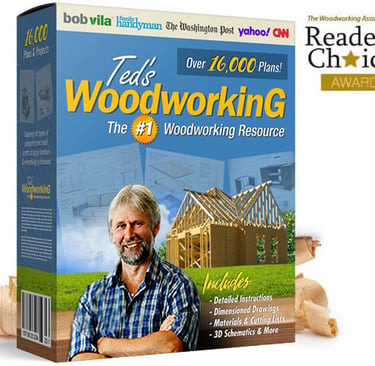
That's why many hobby woodworkers eventually explore Ted's Woodworking, a library containing more than 16,000 woodworking plans covering beginner projects, workshop accessories, furniture, storage solutions, outdoor builds, and much more.
Instead of wondering what to build next, you can spend more time practicing, experimenting, and enjoying the creative side of woodworking.
Looking back, I'm glad I didn't give up after those first difficult attempts. Starting with manageable projects made woodworking feel enjoyable instead of overwhelming, and that simple change made all the difference.

FAQ
1. Which beginner woodworking project should I build first?
A simple toolbox or floating shelf is often a great starting point because both teach essential woodworking skills without becoming overly complicated.
2. What tools do I need for beginner woodworking?
Many beginner projects can be completed using basic hand tools, a drill, a saw, measuring tools, clamps, and sandpaper.
3. How long does it take to finish beginner woodworking projects?
Most beginner-friendly projects can be completed over a weekend, depending on the design and finishing process.
4. Is it better to repeat projects or always try something new?
Repeating similar projects often helps improve accuracy and confidence before moving on to more advanced woodworking techniques.
5. Why do woodworking plans help beginners?
Clear plans simplify measurements, material selection, and construction steps, allowing beginners to spend more time learning practical skills and less time troubleshooting.
Woodworking Design & Project Specialist
Robert focuses on woodworking projects, DIY plans, and workshop inspiration, helping readers build with confidence.

--------------------------------------------
You May Also Like
□ 7 Woodworking DIY Projects That Upgrade Any Home
DIY Build Journal
Woodworking plans, shed plans, beginner DIY projects and workshop inspiration.
© 2026 DIY Build Journal