3 Easy Woodworking Projects Every Beginner Should Build First
Starting woodworking can feel overwhelming when every project online seems complicated or expensive. These three beginner-friendly builds help you develop essential skills, build confidence, and understand why following proven plans can make learning far more enjoyable.
WOODWORKING PLANS
Robert Ellington
8/3/20264 min read


When I first became interested in woodworking, I assumed the best way to improve was to jump into building something impressive. A large workbench. A dining table. Maybe even a cabinet.
That excitement disappeared pretty quickly once I realized I didn't yet have the basic skills those projects demanded.
Looking back, the projects that taught me the most weren't the biggest ones. They were the simplest.
Small builds let you practice measuring, cutting, assembling, and finishing without feeling overwhelmed. More importantly, they give you something every beginner needs—confidence.
If you're just getting started, these three woodworking projects offer an excellent foundation. Each one teaches practical skills you'll continue using long after you've moved on to more advanced furniture and workshop builds.


1. A Simple Wooden Toolbox
A basic toolbox is one of the most practical first projects you can build.
It doesn't require complicated joinery, expensive lumber, or specialized equipment. Instead, it teaches accurate measuring, straight cuts, proper assembly, and keeping every corner square.
Even small mistakes become easy to spot, which helps you improve much faster than simply reading about woodworking techniques.
Best of all, you'll end up with something you'll actually use on future projects.
2. A Floating Wall Shelf
Floating shelves may look simple, but they introduce several important skills.
You'll practice making clean, accurate cuts, sanding visible surfaces, creating smooth edges, and thinking about how finished projects fit inside a real home.
One thing I noticed after building my first shelf was how much attention it taught me to pay to tiny details. A cut that's just a little off becomes surprisingly noticeable once the shelf is hanging on a wall.
Learning that lesson early saves frustration later.
3. A Birdhouse
Many experienced woodworkers smile when someone mentions building a birdhouse.
There's a reason.
It combines measuring, cutting, drilling, assembly, and finishing into one enjoyable weekend project.
Because the materials are inexpensive, beginners also feel less nervous about making mistakes.
That's important because woodworking improves through repetition—not perfection.
The more comfortable you become handling tools and understanding how pieces fit together, the easier larger projects begin to feel.


The biggest challenge for most beginners isn't motivation.
It's knowing what to build next.
After finishing one project, many people spend hours searching online, comparing tutorials, watching videos, and wondering whether they're ready for something more difficult.
Eventually, that excitement starts turning into hesitation.
Instead of building, they keep researching.
That's why experienced woodworkers often recommend following a structured progression rather than randomly choosing projects from the internet.
Having step-by-step plans removes much of the uncertainty. You spend less time guessing dimensions, wondering about material lists, or trying to interpret incomplete diagrams.
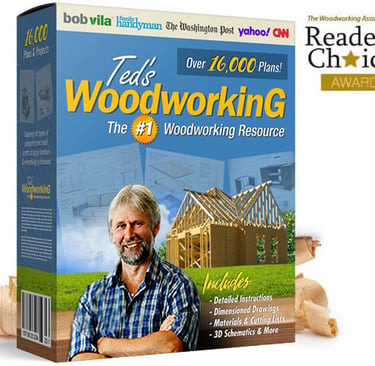
One resource that many hobbyists eventually discover is Ted's Woodworking, a collection of more than 16,000 woodworking plans covering everything from beginner-friendly weekend builds to larger furniture projects.
It isn't about rushing into advanced work. Instead, it gives beginners a huge library of organized ideas so there's always another project waiting when they're ready to learn the next skill.
The real advantage isn't simply having thousands of plans.
It's having a clear path forward.
Consistency is what builds woodworking skills over time, and having reliable project ideas often makes it easier to keep practicing instead of losing momentum.

FAQ
1. What is the easiest woodworking project for complete beginners?
A simple wooden toolbox is one of the easiest starting projects because it teaches measuring, cutting, assembly, and squaring without requiring advanced joinery.
2. Do I need expensive tools to start woodworking?
No. Many beginner projects can be completed with a drill, circular saw, measuring tape, clamps, sander, and a few basic hand tools.
3. How long does it take to complete a beginner woodworking project?
Most first projects, such as shelves or birdhouses, can often be finished over a weekend depending on your experience and available tools.
4. Why are woodworking plans helpful for beginners?
Detailed plans reduce guesswork by providing measurements, material lists, and step-by-step instructions, allowing beginners to focus on learning skills rather than solving design problems.
5. What's the best way to improve woodworking skills?
Build regularly. Completing several small projects teaches more practical skills than attempting one large, complicated build too early.
Woodworking Design & Project Specialist
Robert focuses on woodworking projects, DIY plans, and workshop inspiration, helping readers build with confidence.

--------------------------------------------
You May Also Like
□ 5 Easy Woodworking Projects You Can Finish in One Weekend
□ 7 Easy Woodworking Projects That Look Surprisingly Professional
DIY Build Journal
Woodworking plans, shed plans, beginner DIY projects and workshop inspiration.
© 2026 DIY Build Journal