3 Beginner Woodworking Projects Anyone Can Build
Getting started with woodworking doesn't have to feel intimidating. These three beginner-friendly projects are simple, practical, and designed to help you build confidence while learning the essential skills you'll use for years.
SHED PLANS
Robert Ellington
8/14/20263 min read


Starting a new hobby can feel exciting right up until it's time to make the first cut.
I remember standing in front of a pile of lumber, wondering if I had chosen a project that was already beyond my skill level. Looking back, I realize the problem wasn't my tools or my experience.
It was my expectations.
I thought every woodworking project needed to look like something you'd see in a custom furniture showroom. In reality, the best beginner projects are much simpler. They focus on helping you learn one skill at a time while giving you something useful to enjoy when you're finished.
Every experienced woodworker started somewhere. Most didn't begin with complicated cabinets or large dining tables. They built small projects that taught accurate measuring, clean cuts, careful assembly, and patient finishing.
If you're looking for a comfortable place to begin, these three projects offer an excellent balance of simplicity, usefulness, and skill development.


1. Wooden Step Stool
A small step stool is one of those projects that teaches several essential skills at once.
You'll practice accurate measuring, making straight cuts, assembling sturdy joints, and checking that everything stays square. The finished project is practical enough to use around the house for years.
2. Wall Shelf
A simple wall shelf introduces careful layout, edge finishing, and installation techniques without becoming overwhelming.
Because the design is straightforward, beginners can focus on improving craftsmanship instead of managing complicated construction.
3. Simple Storage Box
Storage boxes are incredibly versatile and surprisingly educational.
Building one helps you improve cutting accuracy, assembly, sanding, and finishing while creating something useful for organizing tools, craft supplies, or household items.
Together, these three projects provide a solid foundation that prepares you for larger woodworking builds in the future.


One thing I've noticed is that confidence in woodworking rarely comes from finishing one impressive project.
It comes from completing several manageable ones.
Every successful build teaches something new. Maybe it's measuring more accurately, applying a smoother finish, or discovering a better way to organize your workspace. Those small improvements accumulate much faster than most beginners expect.
Eventually, many woodworkers reach a point where finding the next project becomes the biggest challenge. Instead of spending valuable shop time searching through scattered tutorials online, having organized project ideas makes it much easier to continue learning.
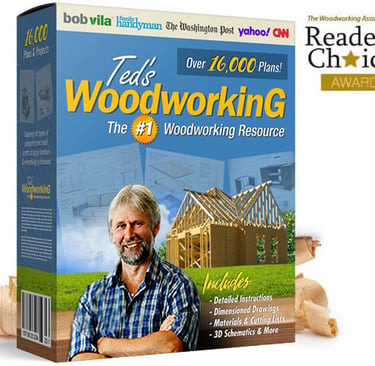
That's one reason many hobby woodworkers eventually explore Ted's Woodworking, a collection of more than 16,000 woodworking plans covering projects for beginners, experienced builders, home décor, workshop organization, furniture, and much more.
The greatest advantage isn't simply the number of plans available. It's having a structured collection that allows you to choose projects matching both your current skill level and the amount of time you have available.
Every experienced woodworker was once a beginner. The difference is simply that they kept building, learning, and enjoying the process one project at a time.

FAQ
1. What is the best first woodworking project for beginners?
A simple step stool, wall shelf, or storage box is an excellent starting point because each teaches foundational woodworking skills while remaining manageable.
2. Do I need expensive tools to begin woodworking?
No. Many beginner projects can be completed using a small collection of basic woodworking tools and careful planning.
3. How long do beginner woodworking projects usually take?
Most can be completed over a weekend, depending on your experience, available tools, and the finishing process.
4. Why should beginners start with smaller projects?
Smaller projects allow you to practice core techniques repeatedly, helping you build confidence before moving on to larger builds.
5. Are woodworking plans helpful for someone with no experience?
Yes. Organized plans simplify measurements, materials, and construction steps, making it easier to focus on learning essential woodworking skills.
Woodworking Design & Project Specialist
Robert focuses on woodworking projects, DIY plans, and workshop inspiration, helping readers build with confidence.

--------------------------------------------
You May Also Like
□ 5 Beginner Woodworking Projects Worth Trying First
DIY Build Journal
Woodworking plans, shed plans, beginner DIY projects and workshop inspiration.
© 2026 DIY Build Journal